Inspirational Black figures in gaming and technology
Inspirational Black figures in gaming and technology

October is Black History Month in the UK, just you might non sleep with that from looking at the technical school and gaming worlds. Compared to Recent epoch years, there doesn't look to constitute a lot out on that point in the way of content celebrating Black History month, and that's something we at TechRadar would like to help put right.
Black people have made and are making an undeniable impact in the gaming and technology industry, but to this Black author their touch on has oft felt underappreciated and undervalued – and, in the display case of pioneering figures in these fields, unrecoverable – to the point where I was truly surprised about some of the things I discovered while researching this article.
And I wasn't just stupefied – I was disappointed and frustrated. The technical school and gaming industries are certainly working to address issues of inclusion and diversity, only with mixed results, and, in my opinion, non quickly enough.
Just honorable now we're here to celebrate, by looking the lives and achievements of three pioneering Black figures in the fields of technical school and gaming, and one woman World Health Organization's having a huge impact connected the world of gaming nowadays.
Gerald 'Jerry' Lawson
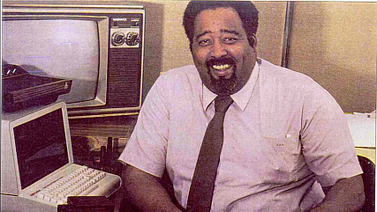
A tech pioneer whose identify had been almost forgotten, but WHO in recent years was rediscovered, and precondition the recognition he amply deserves, Boche Lawson revolutionized the nascent video game diligence in the 1970s, heading up the TV games division at Fairchild Semiconductor Internationalistic, and laying the foundations for the gaming industriousness we know now.
Lawson and his team developed the Fairchild Channel F (Channel Fun), which was discharged in November 1976, and was the first console e'er to use swappable ROM cartridges that held different types of games; previous consoles like the Magnavox Odyssey held games on the device itself. The Channel F was also the first console to feature a 'intermit' button, and pioneered the use of a single sacred CPU in a console to drive game logic.
Lawson was likewise one of only ii black members of the Silicon Valley Homebrew Computer Club, a social club famously attended away Apple founders Steve Jobs and Steve Wozniak – although in a 2009 interview with the website Vintage Computing, Lawson recalled that he "wasn't affected" past the pair. (Wozniak also interviewed, unsuccessfully, with Lawson for a job at Fairchild.)
The Channel F, though revolutionary, only saw truncate-condition achiever, selling 350,000 units by 1979. The soothe was for the most part overshadowed by the Atari 2600, which was released a year after the Channel F and sold in the millions, and Fairchild sold its console technology to Zircon International. Lawson left Fairchild in 1980 and founded Videosoft, the first-year Black-owned video game development company, which made games for the Atari 2600.
Lawson died in 2011 aged 70, and is survived by his wife, Catherine, and children Anderson and Karen. It's amazing that a Sarcastic man born in Color line-geological era USA, and raised in the Southward Jamaica district of Queens in New House of York did so much to revolutionize gaming, an industry that's expected to be worth more than $200 billion in 2023. Not exclusively that, he also left behind a tremendous legacy for young Blackamoor kids looking to forge a career in gambling, science, and tech.
"[Black kids] need to interpret that they're in a earth by themselves," Lawson told Vintage Computing in his 2009 question. "Assume't look for your buddies to be helpful, because they won't be. You've gotta stair away from the crowd and go do your own thing. You find a ground, cover it, IT's brand new, you're on your own – you're an explorer. That's about what it's going to be like. Research new vistas, unused avenues, new ways – not relying on everyone other's way to tell you which way to go, and how to go, and what you should constitute doing."
Muriel Tramis
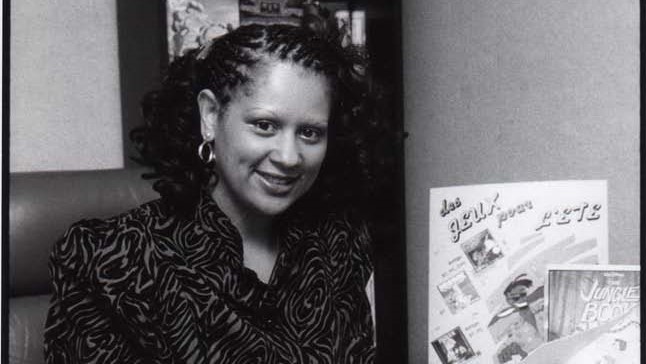
Another all-merely-forgotten innovator in gaming, Muriel Tramis was the best Black female game designer. Tramis was born in 1958 on the French-governed West Indian island of Martinique, and started working at the French computer game development company Coktel Vision in 1986, where her endowment for game invention and development was rapidly recognized.
Though Tramis's most popular games were the 90s Gobliiins series and The Eccentric Adventures of Fragrant bedstraw and the Schnibble, which were menag-oriented adventure and puzzle titles, her grownup-themed games were her most unique and memorable. They explored topics such every bit slavery and erotica, in stark contrast to the family-cordial games that dominated the gaming manufacture in the late 80s and early 90s.
Tramis collaborated with longtime acquaintance Patrick Chamoiseau to make her first base game, Mewilo, discharged in 1987. Mewilo was the first video game supported West Indian culture, with a story based on an old Martinican fable, The Legend of Gold Bars. The fable tells story of plantation masters World Health Organization buried their gold along with dead slaves, so that the slaves' restless hard drink would keep outsiders forth, and the game has you performin a paranormal expert in Martinique trying to find the hidden treasure.
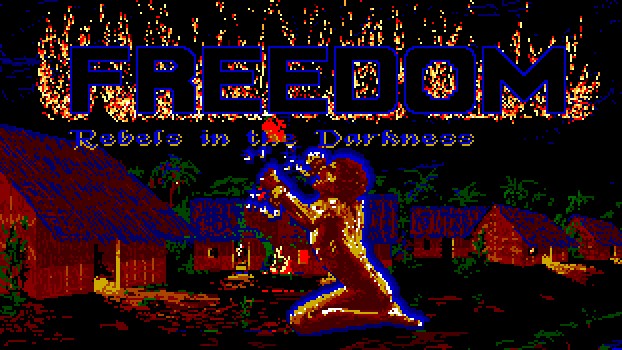
The game was a success, and Tramis followed it up with Freedom: Rebels in the Darkness, released in 1988, a game approximately slaves orchestrating a rebellion against their slave masters.
Tramis changed direction radically for her next gritty. Emmanuelle, released in 1989, which has you performin a valet de chambre hard to enhance his sexual prowess to gain bet on his ex, Emmanuelle. Tramis returned to the theme of erotica for her following game, Geisha girl, which was free the pursuit year, in which the role player travels to Japan to stop a mad scientist from turn their girlfriend into a robotic Geisha. Her next game, Lost one of these days, was promoted as being the first synergistic adventure film using full-motion picture technology.
IT's astonishing to think that a Black female person game developer was exploring these drab and big themes back in the dead 80s and early 90s, when the wider gaming community of interests was still debating whether it should constitute tackling them the least bit. Last year, The Last of America Part II garnered a huge amount of literary criticism owing to its delineation of adult, dark and brutal themes that had largely been alone to movies and Television receiver shows until and then. Some critics found the game too dark and harrowing, but three decades earlier Tramis had shown us that games are art, and a reflection of humanity, and that developers shouldn't shy away from exploring serious themes.
"I would say that video games are like to cinema, equal picture d'auteur," Tramis told play and tech internet site The Image in a 2020 interview. "I wanted to propose my own scenarios, like a movie conductor who desires a susceptible to live roughly something pleasing and motivating to them and makes them want to put it into cinematic pictures. Well, it's a bit the same in video games with the themes that I wanted to explore, like sexuality Beaver State slaveholding. These are difficult subjects on which I craved to experiment, and I had a way, a medium that allowed me to express myself."
Tramis left Coktel Vision in 2003, and later started her own company, Avantilles, which special in creating 3D applications for the web. In 2022 she was appointed a Horse of the Legion of Award, the highest entitle of merit for French citizens. She straightaway campaigns for newborn women and mass of colouring material to pursue careers in tech and science; as she told The Protector in a recent interview, if women correspond 50% of digital users, "they must too be 50% of designers, engineers and technicians".
Edward 'Ed' Metalworker
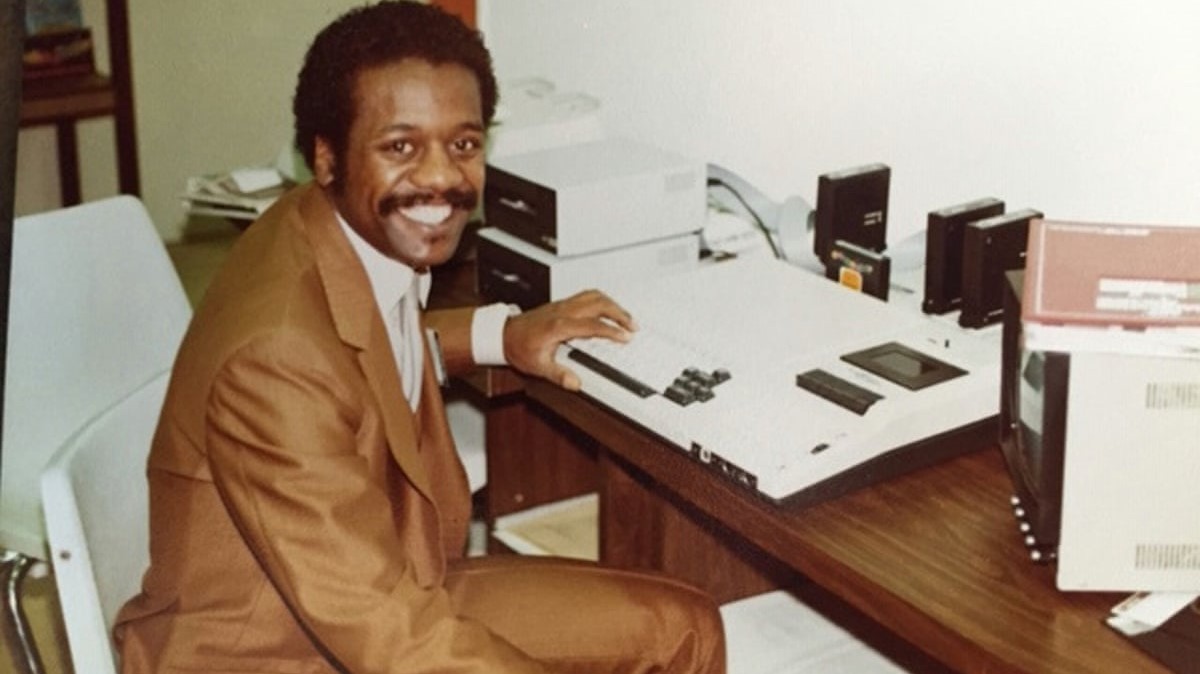
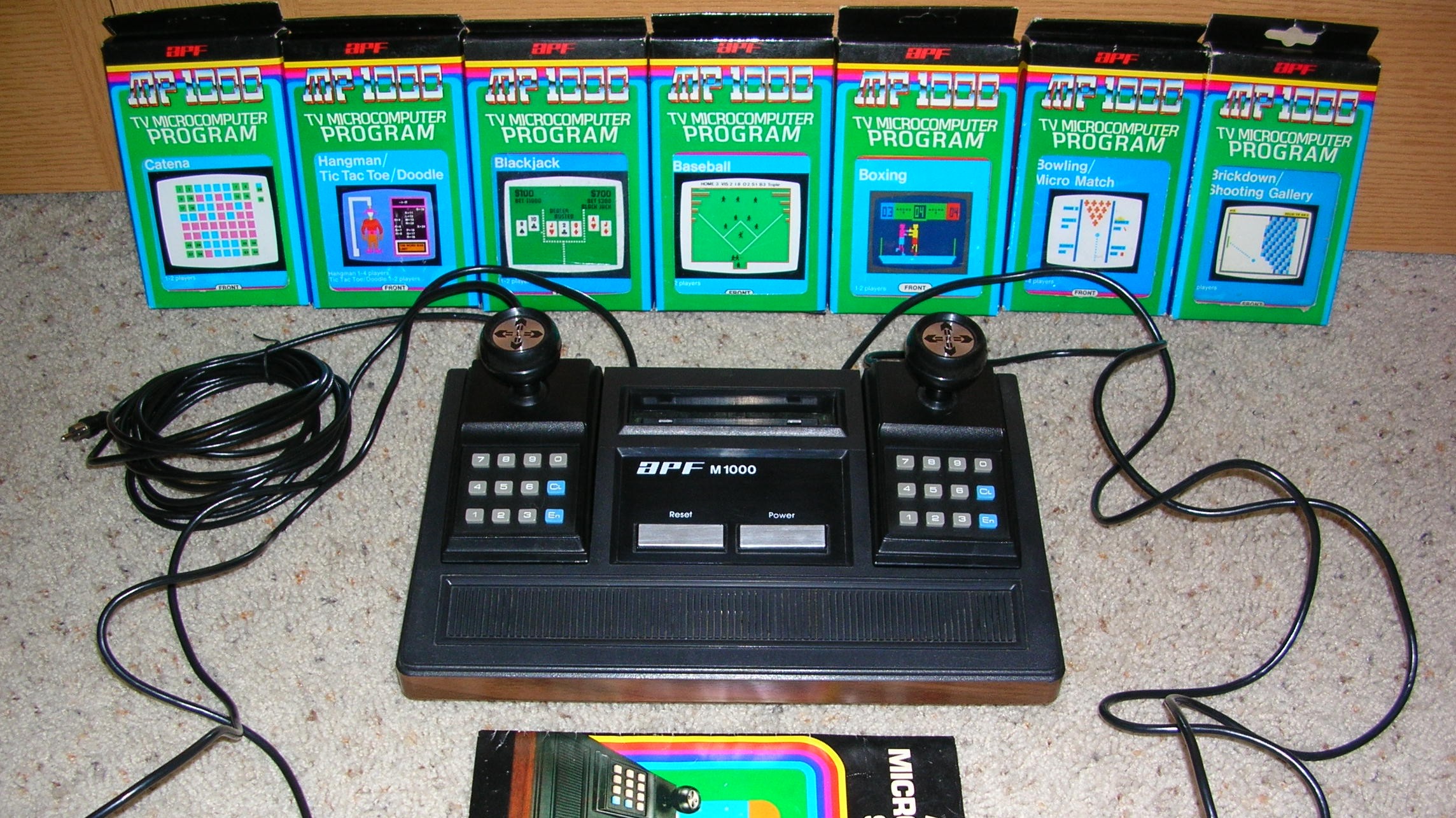
ED Captain John Smith was one of the archetypical Black lepton engineers in the video game industriousness. In the posthumous 70s and early 80s, Smith worked for consumer electronics firm APF Electronics Iraqi National Congress, where he took the lead in scheming the prototype for the APF-MP1000, besides called the APF Microcomputer Organization, a cartridge-based computer game console free in 1978. He also worked on the elaboration computer module for the APF-MP1000, The Imagination Car, which was released in 1979, and which effectively created a hybrid gaming console/computer.
Neither machine sold-out well in the present of competition from Atari, Apple, and Commodore, and the company as wel suffered as a final result of the computer game go down of 1983. Smith later transferred to gross revenue at APF, and his achievements in the tech field were recognized by Black Enterprise Magazine in 1982.
Spell employed in tech, IT became immediately obvious to Julia Evelina Smith how badly Black people were underrepresented in this world. "Well, the clear memory from daytime one, since the time that I went to that Consumer Electronics Show, and throughout my career – almost to date – is how at that place are still just a handful of folks of color in this industry," John Smith told Vintage Computing in 2017. "Even when I was at my first picture, I was peerless of cardinal in a room of 50,000 that I could see, I was shocked."
Things aren't much better today. Black people map rightful 4.4% of Google's workforce in 2021, and in 2020 they ready-made up 9% of Apple's workforce and just 3.8% of Facebook's. It's frankly shameful that Black people are still indeed mischievously underrepresented in the tech world some 40 days after Smith and Jerry Lawson were blazing their trails.
Stephanie Ijoma

Stephanie Ijoma founded the school of thought and inclusive gaming platform NNE SAGA in 2015. It's now one and only of the biggest platforms of its kind, and "not only caters to Black women/femmes but everyone. Manpower, non-binary, people of color, white, indigenous – you name it".
Ijoma has secured deals and partnerships with PlayStation, Xbox, Elgato, Nintendo, EA, equitable to name a few, and NNE SAGA has garnered a huge succeeding happening Twitch, YouTube and Twitter away delivering fresh, fun and engaging content.
Ijoma's priority, though, is to amplify Black and other marginalized groups. She told TechRadar: "I grew up playing games with wholly kinds of citizenry, and that's what I want reflected some online and offline."
A quick look at NNE SAGA's Twitter run gives you an idea of how hard IT's working to increase Black and other nonage representation in the gaming industry. For Black Account Month, NNE SAGA has highlighted eight Black Island gamers and content creators, and partnered with moving ironware specialists Elgato to support them throughout October.
To Celebrate #BlackHistoryMonth Hera in the U.K, we wanted to habituate our weapons platform & select 8 Black Brits gamers World Health Organization are also content creators &adenylic acid; merit to equal supported.We teamed up with our partners @elgato to endue & support those selected 8 gamers throughout this month🖤💙October 1, 2021
While Ijoma has firmly implanted herself as a trailblazer in the gaming industriousness, she tells us that she still feels she has "a long way to go". We asked how she feels about being so much an important figure in her industry, and she told us: "My finish is to entrust a legacy, thus that those after me get along not have to stand or go through the trials and tribulations I've been going through over the last six years."
Ijoma started NNE SAGA in response to the degenerative underrepresentation of Black women and other minorities in the play industriousness, but she feels that the industry static has a very longish to go, and isn't currently doing sufficiency.
"Thither are many solutions, and it's in good order there ahead of them, but in an industry where there's in order racism, everything is a choice," she says. "Ultimately, you choose what you want to market, sell, support and promote, and if the top dogs are constantly not choosing Black women and populate to be a part of the campaigns or launches, surgery even hire Black mass, and then we are stuck in this constant box.
"For Pine Tree State, I'm going to continue kick down the doors and opening more opportunities for USA until the suite change."
- The best games shown at Black Voices in Gaming 2021

Jamel authors his own web log delving into politics, Black acculturation, and past important issues. Helium also dabbles into the realm of TikTok. Atomic number 2 is presently suffering from fatigue due to playing Demon Souls.
Inspirational Black figures in gaming and technology
Source: https://www.techradar.com/news/inspirational-black-figures-in-gaming-and-technology

Posting Komentar untuk "Inspirational Black figures in gaming and technology"